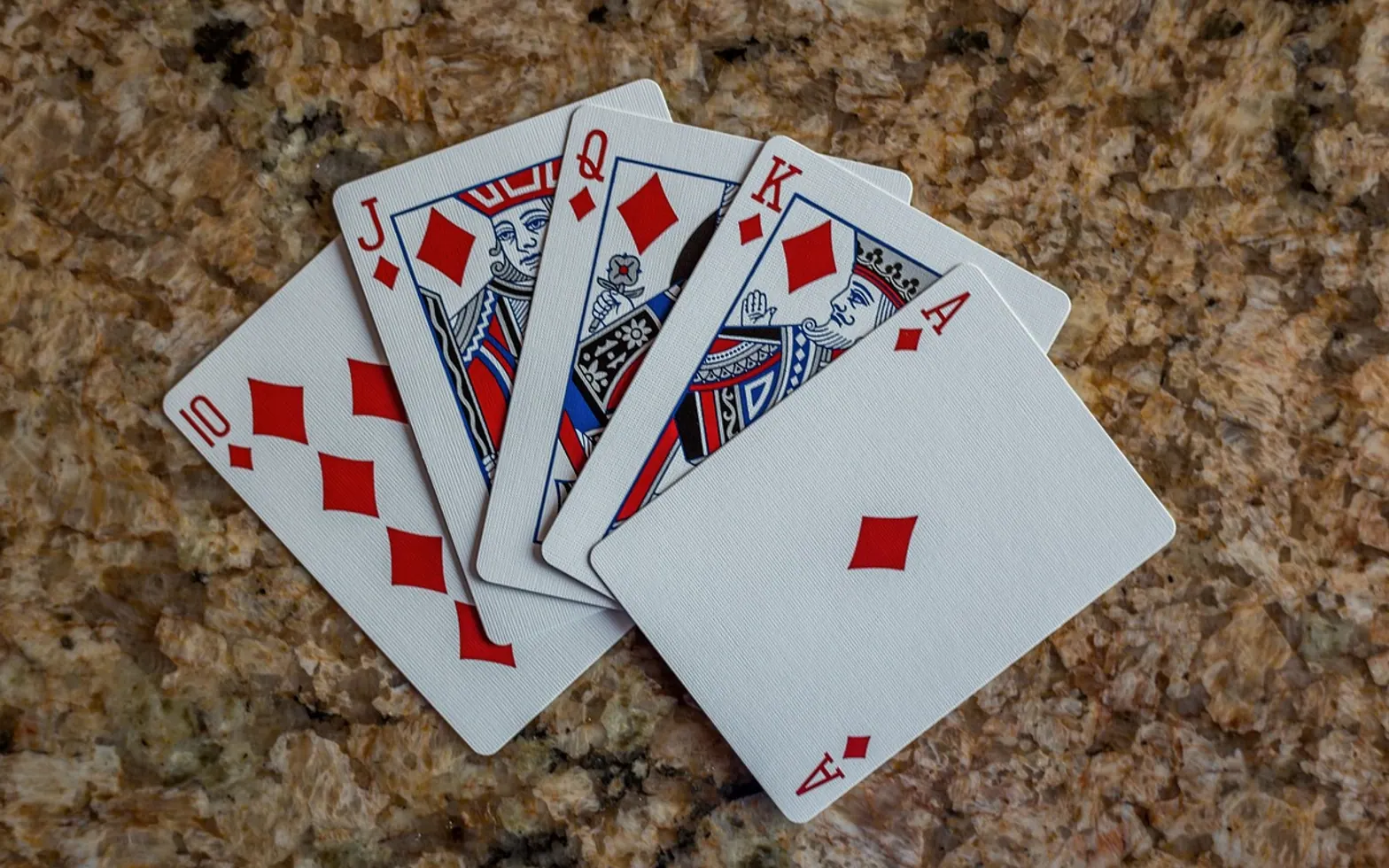
The cards and the hand rankings are the same, but cash games and tournaments are different contests. In a cash game, the chips on the table stand for real money, the blinds never change, and you can stand up whenever you like. In a tournament, everyone pays a fixed entry for a stack of tournament chips, the blinds rise on a schedule, and the prize pool is shared among the players who last longest. Those differences change how hands are played and how a session feels.
Side by side
| Cash game | Tournament | |
|---|---|---|
| What chips are worth | Their face value in money | Nothing outside the event; they decide who survives |
| Buying in | Any amount within the table's minimum and maximum | One fixed entry, sometimes with re-entries |
| Blinds | Fixed for the table | Rise at set intervals |
| Leaving | Any time, taking your chips | Only when you are knocked out or the event ends |
| Payout | Every pot you win | A share of the prize pool for the top finishers |
| House fee | Rake taken from pots or charged by time | A fee added to the entry |
| Swings | Moderate per session | Large; most entries finish without a prize |
| Time needed | As long or short as you choose | Hours, with no known finish time |
How a cash game works
Cash tables are usually described by their blinds. A game written as 1/2 has a small blind of 1 and a big blind of 2 in the local currency. Each table sets a minimum and maximum buy-in, and you can usually top your stack back up between hands, within those limits. Because the chips are money, a chip won is worth exactly as much as a chip lost, and the only reason to leave is that you have had enough. The cardroom earns through the rake, explained in our article on what rake is in poker.
How poker tournaments work
- Entry. Each player pays the buy-in, often shown as two figures: the part that goes into the prize pool and the fee the organiser keeps.
- Starting stack. Everyone receives the same number of tournament chips.
- Blind levels. The blinds, and later often antes, rise after a fixed period. This forces action and steadily shrinks stacks relative to the blinds.
- Eliminations. Players who lose all their chips are out, unless the format allows a re-entry or rebuy during an early period.
- The bubble. The point just before the paid places is reached. Play often tightens because finishing one place higher can mean a prize instead of nothing.
- Final table. The last table plays down to a winner, with each place usually paying more than the one below.
Variants include freezeouts (one entry only), re-entry events, turbos with faster blind levels, sit-and-gos that start as soon as a table fills, and satellites whose prizes are seats in bigger events.
How strategy shifts
Stack depth
Cash players usually sit with deep stacks, often a hundred big blinds or more, so speculative hands and post-flop skill count heavily. Tournament stacks start deep but shrink as blinds rise, and late in an event many decisions come down to moving all-in or folding.
Survival has value
Because prizes are spread across several places, staying in a tournament has worth of its own. That is the idea behind the Independent Chip Model, explained in our guide to ICM in poker. Cash games have no such pressure.
Position and starting hands
The basics carry over: the ranking of hands is identical, and acting late is valuable in both formats. What changes is how wide ranges should be once the blinds make stacks short.
Which format suits you?
- Time: if you want to stop at a set hour, cash games make that easy. Tournaments can run long, and leaving early means giving up your entry.
- Cost control: a tournament entry is a fixed, known cost. A cash session can cost more if you top up, so a firm limit matters. Our guide to setting a gambling budget covers how to fix one in advance.
- Temperament: tournaments involve long spells without a result and frequent early exits. Some players enjoy the build-up; others find it frustrating.
- Swings: tournament results vary much more from one session to the next, which affects how much money you should set aside, as covered in our piece on poker bankroll management.
Mistakes when switching formats
- Bringing tight tournament survival habits to a deep-stacked cash game.
- Treating tournament chips like cash and calling all-ins near the bubble that a cash player would happily take.
- Re-entering a tournament repeatedly without counting the total cost.
- Topping up a cash stack after every loss, so the planned spend quietly doubles.
Either format should be paid for out of money set aside for fun. Real-money poker is open to adults only and allowed in some places but not others, so learn the local position before you enter a game.


Questions? Write to us.
A short note is enough.