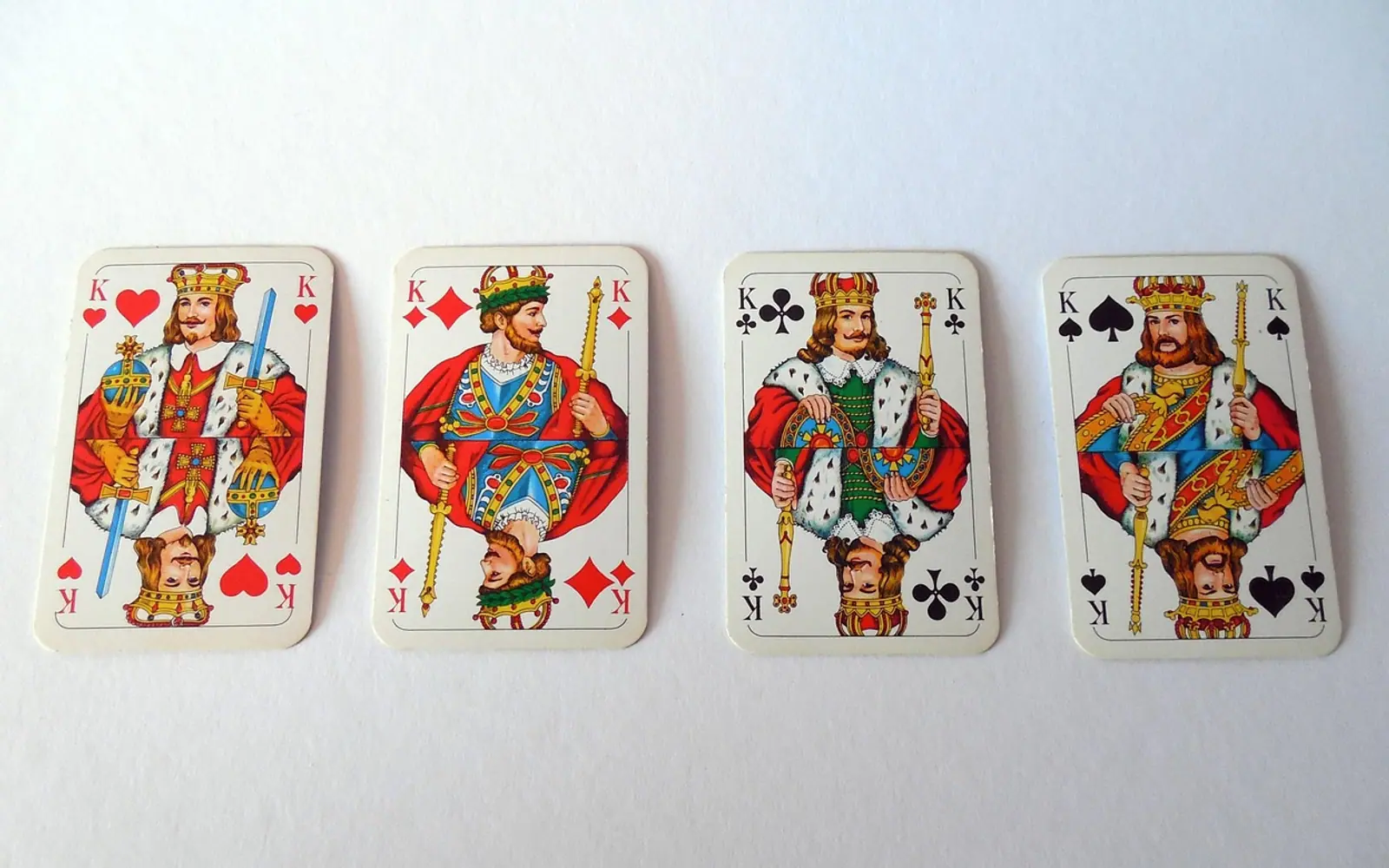
How many of your first two cards are worth playing? Fewer than most newcomers hope. Texas Hold'em has 169 distinct starting hands once you ignore which suits are involved: 13 pocket pairs, 78 suited combinations and 78 unsuited ones. A starting hand chart sorts them into groups and suggests which groups to open with from each seat when nobody has raised yet. It is a starting point for discipline, not a formula for profit.
Reading the shorthand
Charts and strategy articles describe hands in a compact notation. Once you know it, any range becomes readable at a glance.
- A, K, Q, J, T stand for ace, king, queen, jack and ten. The ten is written as T so every rank takes one character.
- s means suited (both cards share a suit) and o means offsuit. AKs is ace-king of one suit; AKo is ace-king of two suits.
- A plus sign means "this hand and everything better of the same type". 77+ covers sevens up to aces; ATs+ covers ace-ten suited through ace-king suited.
- A dash marks a span: 55-22 means fives, fours, threes and deuces.
Behind each label sits a number of card combinations. Every pocket pair can be dealt 6 ways, every suited hand 4 ways and every offsuit hand 12 ways, which adds up to 1,326 possible two-card holdings.
Hands grouped by strength
The groups below are a common way of ordering hands for a full table in an unraised pot. Different authors draw the lines in slightly different places, and that is fine; the broad order matters more than the exact border.
| Group | Hands | Character |
|---|---|---|
| 1. Premium | AA, KK, QQ, JJ, AKs, AKo | Play from any seat, usually with a raise |
| 2. Strong | TT, 99, AQs, AJs, KQs, AQo | Comfortable opens almost everywhere |
| 3. Solid | 88-66, ATs, KJs, QJs, JTs, AJo, KQo | Good from the middle seats onward |
| 4. Speculative | 55-22, A9s-A2s, KTs, QTs, T9s, 98s, 87s, 76s, 65s | Need a cheap entry and a good seat |
| 5. Late-seat extras | KJo, QJo, KTo, ATo, J9s, T8s | Mainly when folded to the cutoff or button |
| Usually fold | Weak offsuit hands such as K7o, J4o, 93o | Rarely make a hand that wins a big pot |
Which groups to open from each seat
Combine the groups with the order of play and you get a rough opening plan for a pot nobody has entered:
- Under the gun and the next seat: groups 1 and 2.
- Middle position: groups 1 to 3.
- Cutoff: groups 1 to 4.
- Button: groups 1 to 5.
- Small blind, folded to you: fairly wide, but remember you will act first after the flop.
The logic is the same as in our guide to poker positions: the more players left to act behind you, the stronger your hand needs to be, because one of them may hold something better.
From single hands to ranges
A range is the full set of hands a player might hold in a given spot. Rather than guessing that an opponent has exactly ace-queen, you picture everything they would play that way: perhaps "77+, ATs+, KQs, AQo+" for a cautious player raising from early position. Thinking in ranges stops you from fixating on one scary hand and helps you see how often a given board actually helps your opponent.
The same idea applies to you. If you only ever raise first-in with group 1 from the first seat, observant players will know it. A chart gives you a balanced, readable plan, and small departures from it are adjustments, not improvisation.
When the chart stops applying
Someone has already raised
Opening ranges assume an empty pot. Facing a raise, the hands worth continuing with shrink sharply, and the question becomes whether to fold, call or re-raise. Our explainer on the 3-bet covers that branch of the decision.
Stacks are short
Late in a tournament, when a player has only a handful of big blinds, speculative hands lose value because there is little money left to win when they connect. High cards and pairs gain value.
The table is unusual
At a table where nearly everyone calls, bluff-friendly hands lose some appeal and hands that make strong pairs gain it. At a very passive table, a slightly wider range can work from late seats.
Common mistakes with starting hands
- Playing any ace. Weak aces often make a pair that loses to a better ace, as explained in our piece on the art of folding pre-flop.
- Overrating suited cards. Sharing a suit helps, but only modestly; a flush is a long way off when the flop arrives.
- Calling raises with hands meant only for opening first-in.
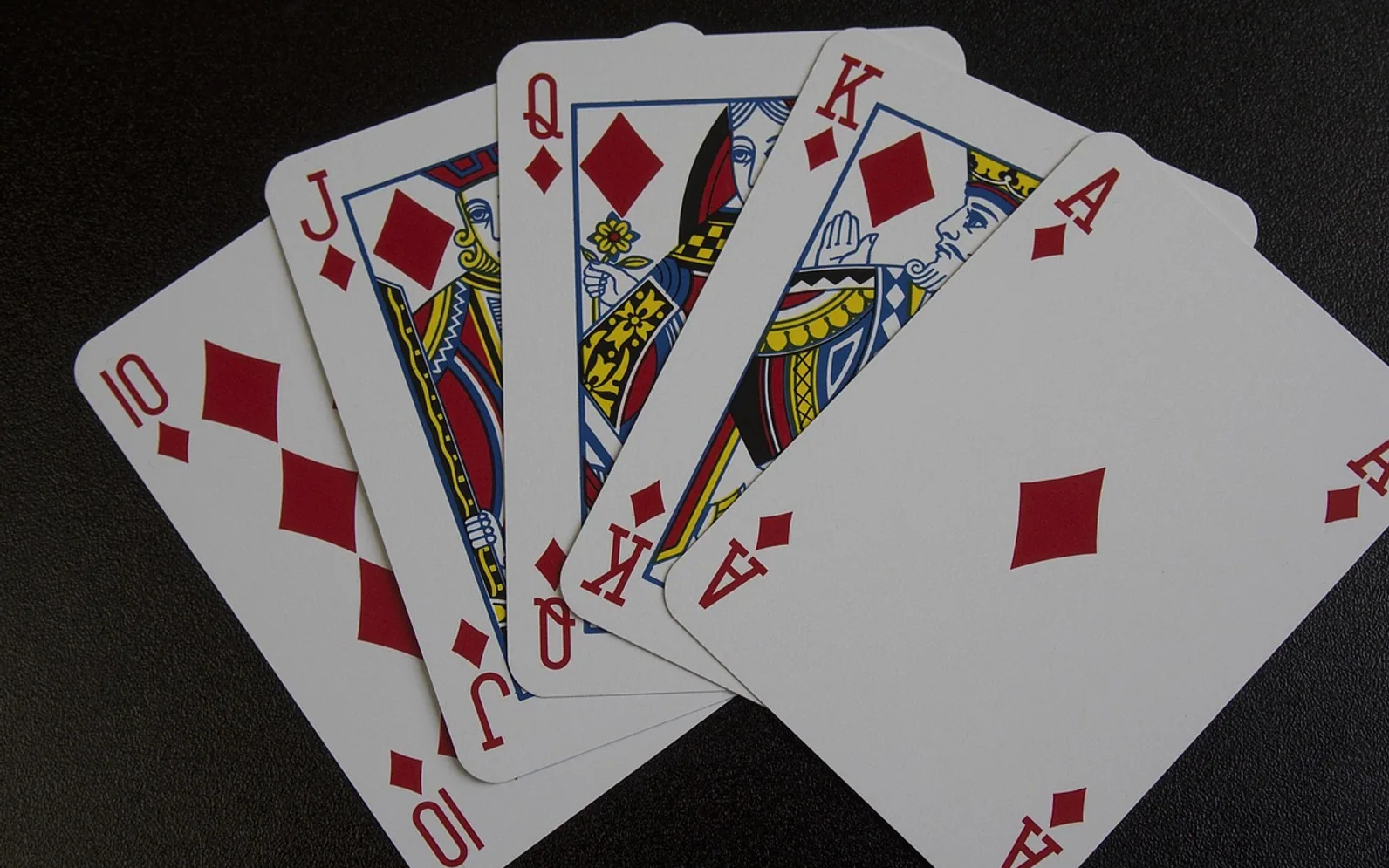
- Forgetting where your hand sits among the ten ranked poker hands: a pair of deuces is still just one pair.
Questions readers ask
Can I keep a chart next to me while playing online?
Some online rooms limit what reference material or software you may use during a hand. Read the room's terms before relying on any aid.
Is the chart the same for Omaha?
No. With four hole cards, hand values shift a great deal, and Hold'em groupings do not carry over.
Card games for stakes are for adults, and the rules on real-money poker differ between countries and states, so confirm what applies to you. A tidy range is a way to enjoy the game with more thought, never a reason to raise your stake.


Questions? Write to us.
A short note is enough.