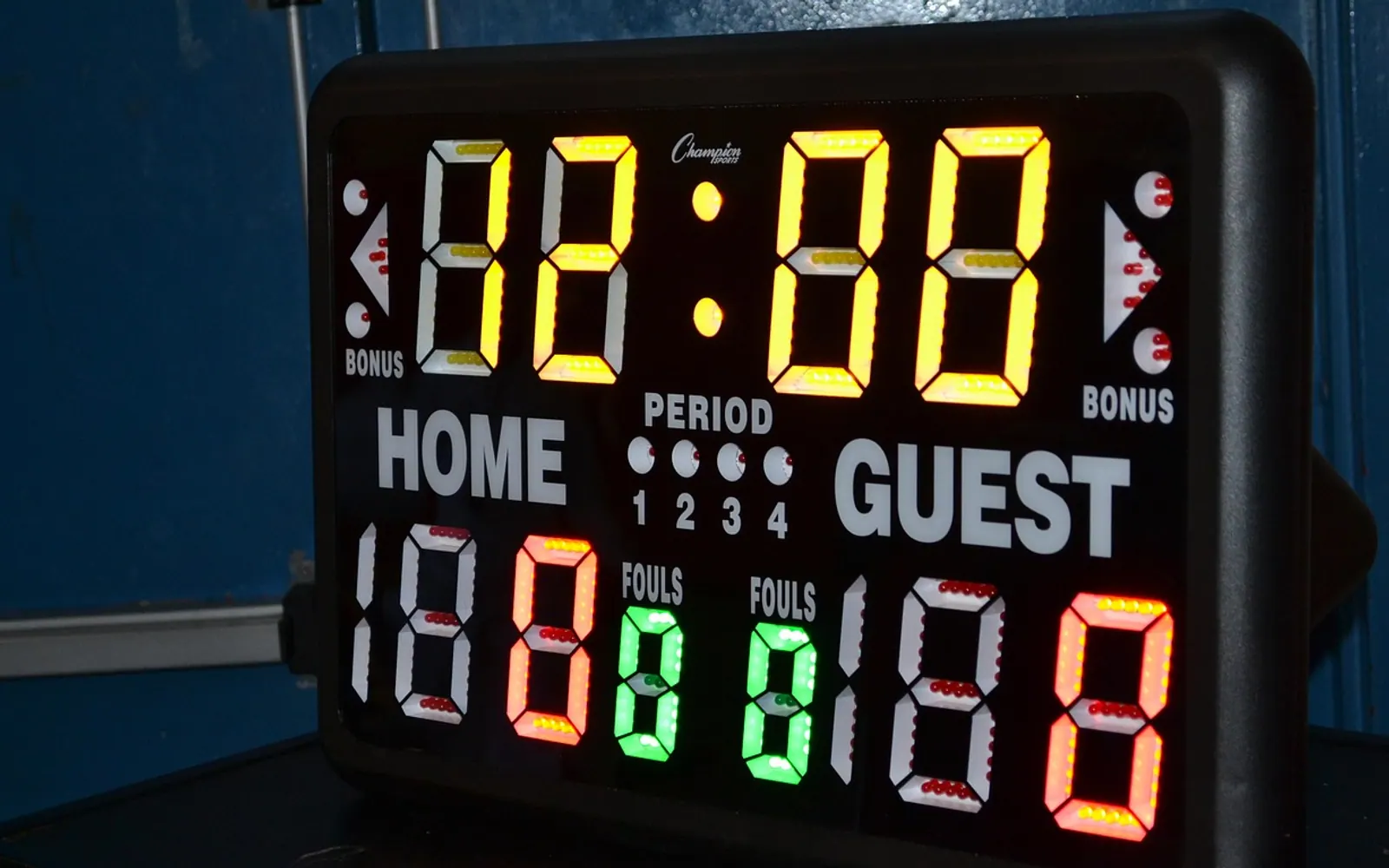
Over/under, also called a totals bet, asks a simple question: will the combined score of a game be higher or lower than a number set by the operator? You are not picking a winner. Both teams can play badly or brilliantly; all that counts is the total.
How the line works
Imagine a hypothetical American football game with a total of 44.5 points. If the final score is 24–21, the combined total is 45, so the over wins. If it finishes 20–17, the total is 37 and the under wins. The winning margin and the winning team make no difference.
The operator sets the number where it expects interest on both sides to be reasonably balanced, then moves it as money comes in or as news arrives: an injury, a lineup change, a weather forecast.
Half points and pushes
Lines ending in .5 exist to avoid ties. A game cannot finish with 44.5 points, so one side has to win. When the total is a whole number, say 44, and the game lands exactly on it, the bet is a push and stakes are normally returned. Some soccer markets use quarter lines such as 2.25 goals, which split your stake across two neighbouring lines; the house rules explain how those are settled.
Reading the odds next to a total
A total comes with a price for each side. In a hypothetical market you might see Over 44.5 at −110 and Under 44.5 at −110, meaning a 110-unit stake wins 100 units of profit on either side. If the operator wants to balance its book without moving the number, it may shade the prices instead, for example −120 on the over and +100 on the under. The gap between those prices and a fair even split is the operator's margin.
Totals across different sports
| Sport | What the total counts | Example line (hypothetical) |
|---|---|---|
| American football | Points | 44.5 |
| Basketball | Points | 221.5 |
| Baseball | Runs | 8.5 |
| Ice hockey | Goals | 5.5 |
| Soccer | Goals | 2.5 |
| Tennis | Games | 22.5 |
In fast, high-scoring games like basketball, a handful of possessions can swing a total, and late fouls often push scores up in the closing minutes. If basketball is your main sport, our piece on betting on basketball without losing perspective covers the wider picture.
Other kinds of totals
- Team totals count the points, goals or runs of one team only.
- Half or period totals count only part of the game.
- Player totals look at a single player's points, rebounds, yards or shots.
- Match statistics cover corners, cards or aces, depending on the sport.
Always check whether overtime or extra time counts. In many basketball and American football markets it does, but the rules differ between sports and between operators.
What actually moves a total
Pace of play, team style, weather for outdoor sports, injuries to key attackers or defenders and what is at stake in the match can all change how many points or goals are likely. None of that guarantees anything, and the line already reflects much of the information that is publicly known. Totals can also be combined with other picks on one slip; read our explanation of how parlay bets work before trying that, because the risk adds up quickly.
Totals versus picking a winner
Some people like totals because they can follow a game without backing either team. Others find them harder, since a single late score can flip a bet in seconds. Neither view makes totals easier to win. If you are new to them, try watching a few games with the line in mind but no money on it, simply to see how often late points change the outcome.
Staying in control
- Sports betting is legal in some places and not in others. Follow the law where you live and use licensed operators only.
- Keep stakes level instead of raising them after a losing total.
- Skip late-night bets on games you had no plan to watch.
A quick reminder: totals are entertainment for adults, not a source of income. Set a weekly limit, keep to it, and take a break whenever a bet starts to feel like something you need to win back.




Questions? Write to us.
A short note is enough.